
Version 0.2.5
>>210580
Aparentemente, alguien donó 2.500$ por un dibujo de Fiddleford x Shapeshifter
>>1665758
ahora no negro...
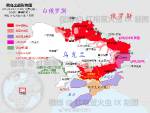
Mapa de la situación de Ucrania segun China. Notese que incluye un mapa de una Republica Popular Independiente de Kherson. ¿Que puede decirnos con eso?
Literalmente yo.
>>1665834
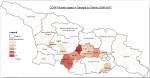
Los científicos del Pentágono también realizaron experimentos con mosquitos tropicales y garrapatas en Georgia. En 2016, se recolectaron 21 590 garrapatas para una base de datos de ADN para estudios futuros en The Lugar Center en el marco del proyecto del Pentágono "Evaluación de la seroprevalencia y la diversidad genética del virus de la fiebre hemorrágica de Crimea-Congo (CCHFV) y los hantavirus en Georgia". Los proyectos del Pentágono relacionados con las garrapatas coincidieron con un brote inexplicable de fiebre hemorrágica de Crimea-Congo (CCHF, por sus siglas en inglés), que es causada por una infección a través de un virus transmitido por garrapatas. En 2014 se infectaron 34 personas (entre ellas un niño de 4 años). En Georgia se han registrado un total de 60 casos con 9 muertes desde 2009, según un correo electrónico filtrado enviado por el director del Centro Lugar, Amiran Gamkrelidze, al Ministro de Salud de Georgia, David Sergeenko.
>>235431
Que rico putamadre, pollada!!
Yo acabo de almorzar hace no más de 20 minutos (si, recontra tarde, ni nos habíamos dado cuenta de la hora
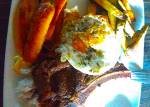
Bistek (aunque no es bistek, sino churrasco) a lo pobre
>>1665838
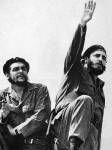
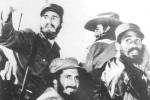
>In January, 1959, Castro and his guerrillas arrived in Havana. Many of them were sporting Santería necklaces and bracelets, made out of colorful beads. Though largely ignored by the American media, the fact did not escape the attention of Santería believers throughout the Island. Santería necklaces are colorful and have a precise color symbolism. Red and black beads, for example, are the colors of Elegguá. All white beads are the ones of Obatalá; red and white are Changó's; blue and crystal beads are Yemayá's; and red and yellow beads are the colors of Ochún. The color of the beads may vary, depending on the aspect or "path" of the orisha
>Colors have an important symbolism in Santería. To Santería adepts, the red-and-black colors of the Movimiento 26 de julio (26th of July Movement, M-26-7) banner had a special meaning: they are also the colors of Elegguá, the God of Destiny, the one who opens and closes the doors to happiness and disgrace. In many Cuban homes a glass full of water devoted to Elegguá is kept behind the main door as a talisman of good luck. When Fidel's barbudos entered Havana in triumph carrying the M-26-7 flags many interpreted it as a signal that Elegguá was protecting Fidel Castro
>>2420098
>>210553
El cartel firmado por Matt ya va por los 980,00$ y el VHS va por los 700,00$
>>210555
La caridad va por los 37.646$
>>1665766
>...to her by a Cuban Santera now living in New York. The woman claims that, a long time ago in Cuba, she attended a Santería grand ritual in which Fidel was immersed in a bathtub full of blood from sacrificed animals. This ritual would protect him against harm and give him total control against his enemies. Another source claims that Castro was consecrated at an early age to Ayaguna, an African deity-one of the 16 types of manifestations of Obatalá—which had miraculously saved him from certain death at the age of six. The consecration was performed at the Birán estate by a servant at the Castro's home, a black woman from Congo and a santera of the Palo Mayombe cult. Castro's daughter Alina Fernández mentions that both Fidel's mother, Lina, and his grandmother, Dominga, were involved in Santería
>By mid-1958 most of the Cuban people profoundly hated the Batista regime. By that time the santeros from Regla and Guanabacoa, two small seafaring towns Southeast of Havana, had joined their Santiago colleagues in their prophecy of Batista's downfall. They were fully convinced that Batista's days were counted after they got word that Fidel was wearing a resguardo prepared by his godmother Celia Sánchez, a powerful santera and a daughter of Yemaya
>When Batista abandoned the country in the early hours of January 1st, 1959, Cuban santeros interpreted the event as an auspicious sign: The revolution was won the day of San Manuel, a holy day of the Orishas. Fidel Castro, therefore, was an "elegido," a man chosen by the Gods
 Hispachan Files